Life in the UK test topics
Every topic the test asks about
30 key topics from the official handbook, grouped by chapter. Each one covers what the test asks, the facts worth memorising and the traps people fall into.

Chapter 1
The Values and Principles of the UK
- The Rule of LawThe principle that everyone in the UK, including the government, must obey the law. No one is above the law, and everyone is equal before it.
- Democracy in the UKThe UK is a parliamentary democracy where citizens elect Members of Parliament to represent them. Power comes from the people through free and fair elections.
- Individual LibertyThe freedom of individuals to make their own choices and live their lives as they choose, within the law and without harming others.
- Mutual Respect and ToleranceTreating others with respect regardless of their faith, beliefs, or background, and accepting that people have the right to hold different views.
- British ValuesThe fundamental values that define British society: democracy, rule of law, individual liberty, and mutual respect and tolerance.
Chapter 2
What is the UK?
- Countries of the United KingdomThe UK consists of four countries: England, Scotland, Wales, and Northern Ireland, each with its own identity, traditions, and (except England) devolved government.
- Patron Saints of the UKEach country of the UK has a patron saint: St George (England), St Andrew (Scotland), St David (Wales), and St Patrick (Northern Ireland).
Chapter 3
A Long and Illustrious History
- Battle of Hastings 1066The decisive battle on 14 October 1066 where William, Duke of Normandy, defeated King Harold II, leading to the Norman Conquest of England.
- The Industrial RevolutionThe rapid development of industry in Britain from the mid-18th to mid-19th century, transforming the country from an agricultural to an industrial economy.
- The English Civil WarA series of civil wars fought between 1642 and 1651, primarily between Parliamentarians (Roundheads) and Royalists (Cavaliers), over governance of England.
- The Glorious Revolution 1688The overthrow of King James II in 1688, when Parliament invited William of Orange and Mary to take the throne, establishing constitutional monarchy in Britain.
- World War One (1914-1918)A global conflict from 1914 to 1918, in which Britain and its allies fought against Germany and its allies. Known as "The Great War," it caused unprecedented casualties.
- World War Two (1939-1945)The global conflict from 1939 to 1945, in which Britain and the Allies fought Nazi Germany, Italy, and Japan. Britain stood alone against Hitler for over a year.
- Winston ChurchillBritish Prime Minister during World War Two (1940-1945), famous for his inspiring leadership and speeches that helped Britain resist Nazi Germany.
- Magna CartaA historic charter signed in 1215 that established the principle that everyone, including the King, was subject to the law.
Chapter 4
A Modern, Thriving Society
- William ShakespeareEngland's greatest playwright and poet (1564-1616), author of famous works including Hamlet, Romeo and Juliet, and Macbeth.
- Sir Isaac NewtonEnglish mathematician and physicist (1642-1727) who discovered the laws of gravity and motion, revolutionising our understanding of the physical world.
- Florence NightingaleThe founder of modern nursing (1820-1910) who transformed healthcare with her work during the Crimean War and pioneered hygiene standards in hospitals.
- UK Bank HolidaysOfficial public holidays in the UK when most people have the day off work. England and Wales have 8 bank holidays, Scotland has 9, and Northern Ireland has 10.
- Remembrance DayHeld on 11 November to remember those who died in wars, marked by wearing poppies, a two-minute silence at 11am, and ceremonies at war memorials.
- The National Health Service (NHS)The UK's publicly funded healthcare system, established in 1948, providing free healthcare to all residents at the point of use.
- The UK Education SystemEducation is compulsory in the UK from age 5 to 18. It includes primary school, secondary school, and optional further and higher education.
Chapter 5
The UK Government, the Law, and Your Role
- The Prime MinisterThe head of the UK government, leader of the political party with the most MPs in the House of Commons, and the most powerful political figure in the country.
- The MonarchyThe UK is a constitutional monarchy where King Charles III is the head of state. The monarch's role is largely ceremonial, with real power held by Parliament.
- DevolutionThe transfer of powers from the UK Parliament to the Scottish Parliament, Welsh Senedd, and Northern Ireland Assembly, allowing them to make decisions on certain issues.
- The Equality Act 2010UK law that protects people from discrimination based on nine "protected characteristics" including age, race, sex, and disability.
- The Human Rights Act 1998UK law that incorporates the European Convention on Human Rights into British law, guaranteeing fundamental rights and freedoms.
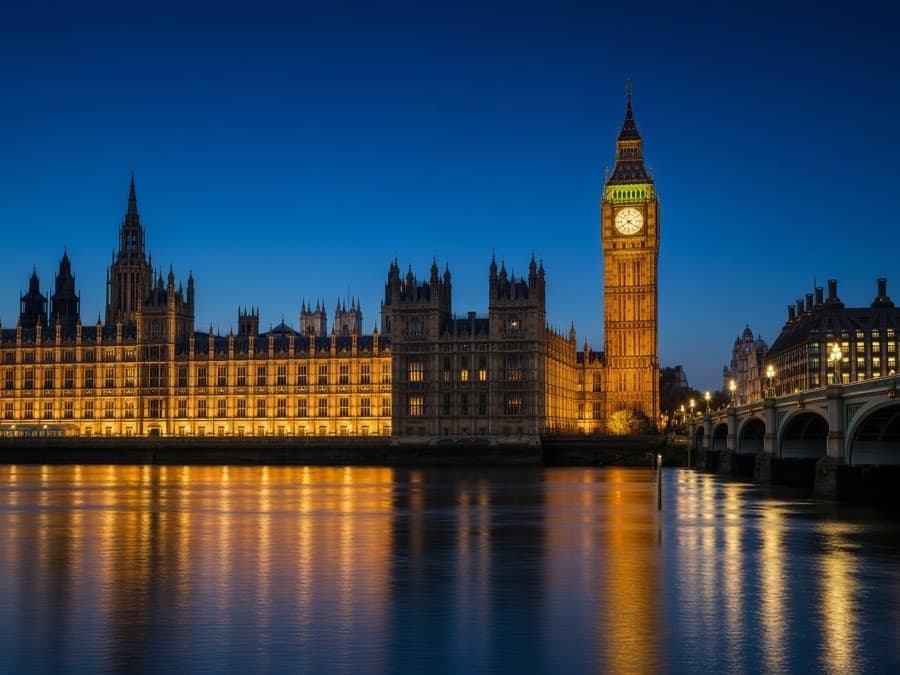
- UK ParliamentThe supreme legislative body of the United Kingdom, consisting of the House of Commons, House of Lords, and the Monarch.
- House of CommonsThe elected lower house of the UK Parliament, consisting of 650 Members of Parliament who represent constituencies across the UK.
Chapter 6